
Authenticity
Ponder the word authenticity. How much do you value that word in a friendship? How much do you live it out in your own life? Is the way that you’re feeling inside showing on your outside? Some people thrive at this trait in each extreme.
Meet Joy, a bubbly, cheerful, smiling, content woman who radiates happiness. Perhaps she doesn’t even pick up on other people’s sadness hanging from them like a baggy overcoat. Her enthusiasm and positive attitude come from somewhere deep inside herself, and sometimes it’s almost even contagious. Nothing keeps Joy down.
Then there’s Matilda. She walks with her shoulders slumped; it’s evident that life has beaten her down. She can barely make eye contact with people, and she sighs frequently. There’s nothing you can say to her that she can’t make into a weight upon her heart. All of the hopelessness inside her seems to ooze out of her pores. You’ve never seen her smile.
Hopefully most of us fall somewhere in the middle between Joy and Matilda in terms of being honest about the way that we are feeling. But what about the beliefs that we hold? Are we being authentic to them? Do the words we read in Scripture penetrate our heart and affect our day to day life and choices? Do we live on two different planes in life - the ethereal and idyllic world that’s reflected in church - the beauty of loving our neighbor as ourselves and serving the poor, sowing seeds of the Gospel, and then spend the rest of our week caught by the weeds of annoyance and discontent?
Chapter 4 admits this tendency we have: “Everydayness is my problem” (55). “I had a theology of suffering that allowed me to pay attention in crisis, to seek small flickers of mercy in profound darkness. But my theology was too big to touch a typical day in my life. I’d developed the habit of ignoring God in the midst of the daily grind” (55).
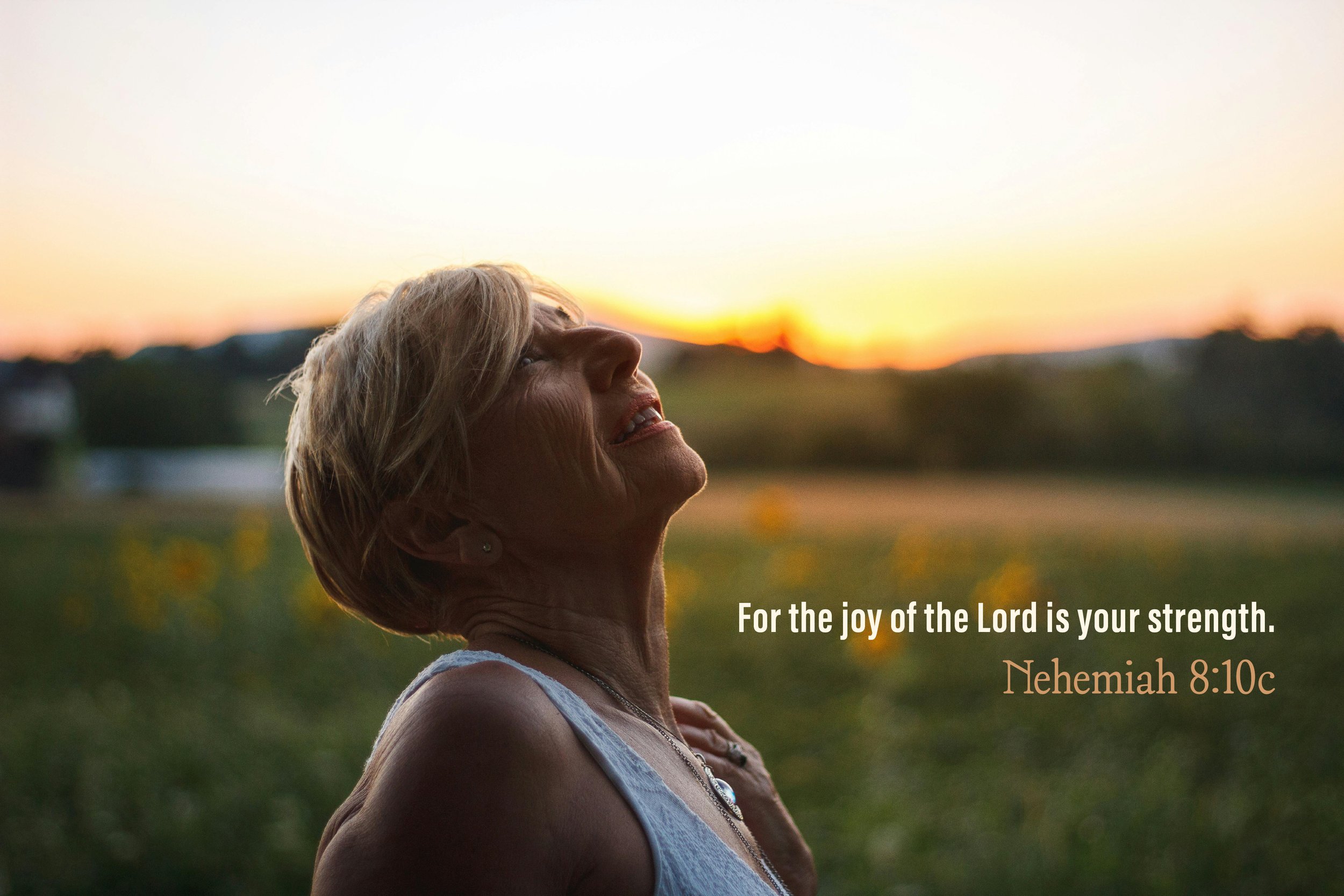
The joy of the Lord being our strength isn’t just something we sing about in Sunday School: it is a comforting blanket we hold around us, a shield we lift high, and a truth as big as the mountains. We don’t just trust its truth when life seems good or when life feels insurmountable. It ought to run through our veins and affect our interaction with every circumstance where our life’s path weaves. It is our foundation.
Tish Harrison Warren admits that “Otherwise, I’ll spend my life imagining and hoping (and preaching and teaching about how) to share in the sufferings of Christ in persecution, momentous suffering, and death, while I spend my actual days in grumbling, discontentment, and low-grade despair” (56). Can you see the honesty in that statement? Don’t you know people like that? Sometimes aren’t you in that same boat? In my own life, I know a Christian woman who constantly grumbles and can only seem to see the negative in her life. Yet she reads her Bible, goes to Bible studies, attends church, prays, and seems to have a relationship with the God of the universe. How is it then that she doesn’t hold out her hands in her moment by moment frustrations of her daily life and take a deep breath to let God fill her with a sense of peace and promise and hope? I don’t want to judge her; I know that I too have times where I’d rather just bury my head in the disappointments and broken dreams and wallow there. But God calls each one of us to live out our faith. James 2:24 admonishes us, “You see that a person is considered righteous by what they do and not by faith alone.” So it’s fine to believe the truths in Scripture; in fact, it’s imperative. But it’s not enough to stop there. We must let the beauty in those promises trickle all the way down to each one of our breaths and become a part of our everyday reality.
